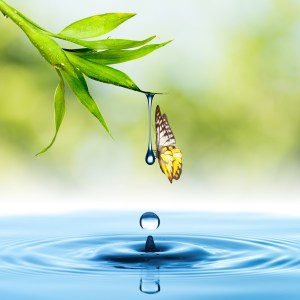
Perfect in every detail are delicate drops of water cascading gently over rain-soaked leaves and misty dew blanketing early morning fields. Such simple beauty makes for gorgeous photographs.
The intricacy and design of such tiny droplets remain a mystery to most of us. And to most, we find it just as mysterious that through such tiny droplets can emerge a beautiful phenomenon of color splashed across our skies. Innumerable shades of red, orange, yellow, green, blue, indigo, and violet often appear as a bow of colors to our wonder after rainfall.
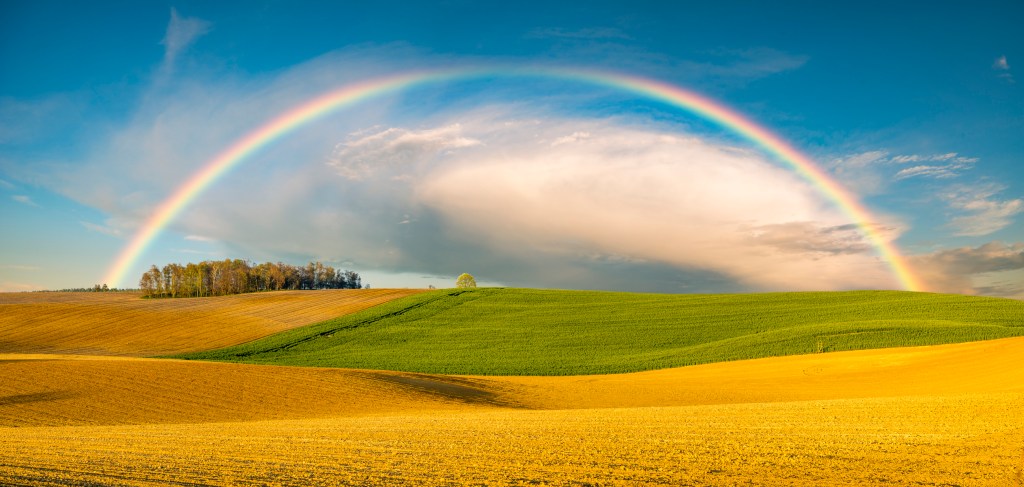
I have appreciated this phenomenon, but not necessarily the complexity of it all. Nature’s multi-colored bow in the sky—the rainbow—is light-illuminated as the sun’s rays shine through the atmosphere in suspended raindrops, spray, and mist. First, the rays are bent (refracted), then bounce back (reflected) toward the source at an angle of 40–42°, and then are refracted again.5 In this process, visible light separates creating a stunning “spectrum” of colorful display.
As this chromatic array of vivid colors forms opposite the sun, sometimes conditions allow for a secondary rainbow. This secondary bow occurs when light reflects twice within raindrops, causing the colors of the reflective rainbow to be reversed, mirroring the first.

Rainbows of any sort are nothing short of awe-inspiring. It grieves me, though, that this sense of the rainbow—the phenomena of nature’s rainbow—seems to be all but lost. Has nature’s rainbow faded in its prominence in today’s current culture? Another symbolism of the rainbow appears to be taking center stage from what has been appreciated and understood for ages. In this way, the meaning is becoming increasingly obscured despite its significance and how it has been viewed and attested to for thousands of years, at the least—depending on your interpretation of time.
And so, it was thousands of years ago, transcribed in a book of antiquity, where unrelenting rainfall pouring from the sky and nature’s rainbow took on particular meaning. As reported in the following ancient Hebrew script, the bow in the cloud was declared as a sign of a covenant, the sign of a promise.
וַיֹּ֣אמֶר אֱלֹהִ֗ים זֹ֤את אֽוֹת־הַבְּרִית֙ אֲשֶׁר־אֲנִ֣י נֹתֵ֗ן בֵּינִי֙ ת־קַשְׁתִּ֕י נָתַ֖תִּי בֶּֽעָנָ֑ן וְהָֽיְתָה֙ לְא֣וֹת בְּרִ֔ית בֵּינִ֖י וּבֵ֥ין הָאָֽרֶץ׃
Westminster Leningrad Codex6
וְהָיָ֕ה בְּעַֽנְנִ֥י עָנָ֖ן עַל־הָאָ֑רֶץ וְנִרְאֲתָ֥ה הַקֶּ֖שֶׁת בֶּעָנָֽן׃
וְזָכַרְתִּ֣י אֶת־בְּרִיתִ֗י אֲשֶׁ֤ר בֵּינִי֙ וּבֵ֣ינֵיכֶ֔ם וּבֵ֛ין כָּל־נֶ֥פֶשׁ חַיָּ֖ה בְּכָל־בָּשָׂ֑ר וְלֹֽא־יִֽהְיֶ֨ה ע֤וֹד הַמַּ֙יִם֙ לְמַבּ֔וּל לְשַׁחֵ֖ת כָּל־בָּשָֽׂר׃
וְהָיְתָ֥ה הַקֶּ֖שֶׁת בֶּֽעָנָ֑ן וּרְאִיתִ֗יהָ לִזְכֹּר֙ בְּרִ֣ית עוֹלָ֔ם בֵּ֣ין אֱלֹהִ֔ים וּבֵין֙ כָּל־נֶ֣פֶשׁ חַיָּ֔ה בְּכָל־בָּשָׂ֖ר אֲשֶׁ֥ר עַל־הָאָֽרֶץ׃
וַיֹּ֥אמֶר אֱלֹהִ֖ים אֶל־נֹ֑חַ זֹ֤את אֽוֹת־הַבְּרִית֙ אֲשֶׁ֣ר הֲקִמֹ֔תִי בֵּינִ֕י וּבֵ֥ין כָּל־בָּשָׂ֖ר אֲשֶׁ֥ר עַל־הָאָֽרֶץ׃ פ
This script appeared in the Torah, the first of five Books of Moses, in particular, Sefer Bereshit, the book of Genesis—Beginnings, ultimately codified in the Bible. Although this ancient writing of antiquity is often overlooked or devalued, its importance cannot be so easily dismissed.
The Biblical text has stood the test of time. What other text can boast 100 million copies sold annually and 50,000 copies sold every minute? “Its complexity can boggle great minds, and yet its simplicity can be understood by children. It is the most widely read, most fiercely debated, and most often quoted book in history”.7 As such, the Bible has been the world’s most impactful book.
In addition to Genesis’ ancient, recorded history surrounding the rainbow and torrential rainfall, many legends and folktales also tell of unyielding rain resulting in violent global flood waters. Some of these tales include the “Sumerian story of Ziusudra, the Akkadian Atrahasis Epic, and the Gilgamesh Epic…renowned flood accounts written in the Ancient Near East.”8
In fact, humanity’s familiarity with the story of a “great flood” results from more than 270 known flood legends told and retold for generations worldwide. And, scientifically, it is interesting to contemplate how over 70% of the rocks on continents have been laid down by water and contain fossils”.9 All lending credibility to a flood of great proportion.
So, the beginning of the story of the flood and rainbow is not so unfamiliar. As prevailing wickedness arose en masse to an unrepentant level of perverseness, the wrath of God would no longer be held back. Comprehension of such wickedness is hard to imagine. However, recent recorded history has shown how evil mankind can become when evil is not reigned in, as we learned from the concentration camps of Hitler. However, in Noah’s era, what deserved such massive judgment? How bad was it that the righteous hand of God would not be restrained?
I believe this question can only be answered in one of the flood stories—one that I cannot dismiss, that I do not find cloaked in legend but see as a credible, detailed report. Such I found in that book of antiquity, Sefer Bereshit, the book of Genesis, which describes how “the LORD saw that the wickedness of man was great in the earth and that every intention of the thoughts of his heart was only evil continually. And the LORD regretted that he had made man on the earth, and it grieved him to his heart” (Genesis 6:5-6).
Even in such a state of affairs in the world, God’s mercy extends beyond our understanding. “For as the heavens are high above the earth, so great is His mercy toward those who fear Him. As far as the east is from the west, so far has He removed our transgressions from us. As a father shows compassion to his children, so the LORD shows compassion to those who fear Him. For He knows our frame; He remembers that we are dust” (Psalms 103:11-14). And that mercy was shown to one man and his family. “Noah found favor in the eyes of the LORD” (Genesis 6:8).
Other than Noah, his wife, his three sons, and their wives, were there any others whose intentions of the heart were NOT evil continuously? You would think there had to be someone else who was at least repentant. Apparently not, as we are told there were only eight souls on that boat. “Noah had three sons…Noah and his sons and his wife and his sons’ wives with him went into the ark to escape the waters of the flood” (Genesis 6:9, 7:7).
Had it ever rained before that moment? That really is unknown since we do not know the pre-flood environment. However, we do know at the beginning of time, it had not yet rained as “a mist was going up from the land and was watering the whole face of the ground” (Genesis 2:6). This misting of the earth may have been how the environment was watered in Noah’s era or rain from above may have been part of the water cycle at that time.
But not usual or part of the water cycle occurred on that fateful day when “all the fountains of the great deep burst forth, and the windows of the heavens were opened. And rain fell upon the earth forty days and forty nights” (Genesis 7:11-12). This was not gentle rain that slowly lifted a huge boat. When the “great deep” burst forth, it would have been massive and violent.
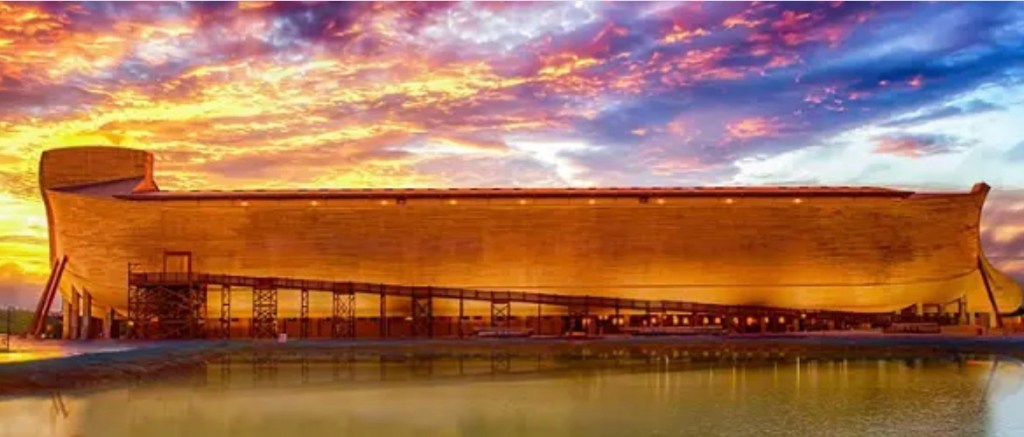
A boat or ark that could have withstood such a traumatic event capable of saving the race of mankind would not have been what we see illustrated in children’s books, but more similar to a barge. “This is how you are to make it: the length of the ark 300 cubits, its breadth 50 cubits, and its height 30 cubits” (Genesis 6:15). Pictured below is a modern replica that has actually been built in Williamstown, Kentucky.
The end of the flood story is also familiar—that the occupants of the ark survived and restarted civilization. However, their adventure did not end when the torrent of rain stopped. They were afloat for a long time, a very long time. “…The waters increased and bore up the ark, and it rose high above the earth…and the ark floated on the face of the waters…that all the high mountains under the whole heaven were covered…covering them fifteen cubits deep” (Genesis 7:17-20). Not surprisingly, with so much water, the ark was floating on the face of the waters for an entire year (Genesis 7:11, 8:13). Can you imagine drifting on a barge for a year, wondering about your future? Would you have a future? Did the family doubt Noah? Did Noah doubt?
With this catastrophic event of rainfall, certainly, the rainy seasons had started in earnest. We understand it stopped raining after 40 days and 40 nights, but did it rain again in due season while this one family floated on the waters for a year? Did they enjoy hearing the patter of rain on the roof as we often do, or did it strike fear into their hearts of rain yet again? As time would tell, however, not only did the continuous rain stop, but the land began to dry out.
God remembered Noah and…made a wind blow over the earth, and the waters subsided. The fountains of the deep and the windows of the heavens were closed, the rain from the heavens was restrained, and the waters receded from the earth continually. At the end of 150 days the waters had abated, and…the ark came to rest on the mountains of Ararat. And the waters continued to abate until…the earth had dried out. Then God said to Noah, “Go out from the ark…” —Genesis 8:1-16
“I Establish My Covenant With You…”
Then Noah built an altar to the LORD…And when the LORD smelled the pleasing aroma, the LORD said in his heart, “I will never again curse the ground because of man, for the intention of man’s heart is evil from his youth…While the earth remains, seed time and harvest, cold and heat, summer and winter, day and night, shall not cease...”
“I establish my covenant with you, that never again shall all flesh be cut off by the waters of the flood, and never again shall there be a flood to destroy the earth. This is the sign of the covenant that I make between me and you and every living creature that is with you, for all future generations: I have set my bow in the cloud, and it shall be a sign of the covenant between me and the earth. When I bring clouds over the earth and the bow is seen in the clouds, I will remember My covenant that is between me and you and every living creature of all flesh. And the waters shall never again become a flood to destroy all flesh. When the bow is in the clouds, I will see it and remember the everlasting covenant between God and every living creature of all flesh that is on the earth.” —Genesis 8:20-9:16
With a gorgeous array of splendid colors, He established His covenant with us—His promise to us.
Throughout the eras of time, surely it was then, as it is now. Nature’s rainbow seems to illicit fascination and wonder. Though we now feel we understand the phenomena to some extent, it still takes us a bit by surprise when we see the beautiful array. To me, this sense of the rainbow will never lose its prominence.
And for me, the true history of the rainbow transcends folklore and legend. The rainbow envelops a mystery of a promise by a grieving God that despite what mankind had become, He would begin anew. And with that beginning, there would be no threat or fear of such catastrophic destruction by water across the land, despite its prior occurrence. Mankind could always depend on higher ground. Hearts would even be joyful when the rains came to water the earth.
And so it is, by the sign of nature’s rainbow—His covenant promise to us—that we can appreciate the rain when it comes, always knowing that it will come and go. We can treasure our beaches, oceans, lakes, and swamps with confidence understanding their behavior. And we can live with assurance knowing that life will continue as He promised so long ago, that “While the earth remains, seed time and harvest, cold and heat, summer and winter, day and night, shall not cease.”


 kaffeeklatsch | coffee & conversation