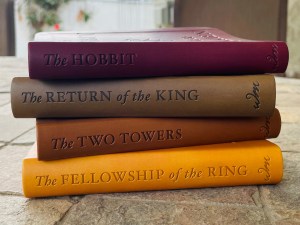
I have watched some of the movies and read excerpts. I may have even sped-read through some of The Hobbit. They say that Tolkien’s Hobbit and Lord of the Rings is fantasy for adults just as much as for children. I’d say that’s true since my students are true fans to this day! Ok, my turn. I’M IN.
President James A. Garfield | A Tale of Madness, Medicine, and Murder
In this new season of life, I am determined to read as the spirit moves me. In the past, I sincerely appreciated everything I read, well-chosen in educating my four favorite students, along with our many field trip endeavors. But I always knew the purpose and how it would best fit into the course of education.
I picked up Destiny of the Republic with no such purpose or foresight as I knew not what to expect. What I did know is that the end of this true story was heartbreaking. And what could be accomplished in just six months in office?
However, the value of a person extends beyond what they accomplished or how and when they died. The value of a person rests in how they lived. So I chose to read about this little-known President. Who was the man, and how did he live?
Legacy of a Man
With only a few months in office, James Garfield’s legacy certainly was not made in his position as President of the United States. As it should be for us all, his legacy was made in how he lived, which for him started in the home. Here is a flavor.
“With his daughter and four sons gathered around his feet, he read for hours without rest, eager to introduce them to his favorite works, from Shakespeare plays to The Arabian Knights to Audubon’s detailed descriptions of the woodchuck, the brown pelican, and the ferruginous thrush.“
In His Own Words
Some of his statements shed much light on Garfield’s depth of spirit.
I would rather be beaten in RIGHT than succeed in WRONG.
This is our only revenge…the immortal principles of truth and justice…shall stand equal before the law.
The Destiny of the republic is to be decreed…by…firesides, where thoughtful voters…with the calm thoughts inspired by love and home and country, with the history of the past, the hopes of the future, the reverence for great men who have adorned and blessed our nation in days gone by, burning in their hearts—there God prepares the verdict which will determine the wisdom of our work tonight.
You were not made free merely to be allowed to vote, but in order to enjoy an equality of opportunity in the race of life…Permit no man to praise you because you are black, nor wrong you because you are black. Let it be known that you are ready and willing to work out your own material salvation by your own energy, your own worth, your own labor.
Light itself is a great corrector. A thousand wrongs and abuses that are grown in the darkness disappear like owls and bats before the light of day.
There is no horizontal stratification of society like the rocks in the earth, that hold one class down below forevermore, and let another come to the surface to stay there forevermore. Our Stratification is like the ocean, where every individual drop is free to move, and where from the sternest depths of the mighty deep any drop may come up to glitter on the highest wave that rolls.
Reflections
In Destiny of the Republic, I learned historical facts of President Garfield’s life as much as I learned about his inadequate medical care he received after he had been shot. As an interesting sidebar, were the efforts of a young Alexander Graham Bell to invent a machine to help in the President’s care that ultimately helped the care of others.
I found it all very interesting. Previously, I had never considered or even knew about the story of the life of James A. Garfield. Candace Millard has introduced me to someone I want to know better.
Having learned the structure of Garfield’s life and some of its details, I hope to learn more about the inner man. He was known as the Preacher President. I would like to know more about that. There is also the book Civil War Letters of James A. Garfield, which sounds intriguing. Some of the best sources to determine the inner person, of course, can be found in their own words.
I am left with these thoughts of President Garfield—a family man, a spiritual man, though not perfect—gregarious living life to the fullest—a self-learner, driven and determined in his pursuits, intelligent, from a “rags to riches” life, and interestingly, he was thought to have begun the healing of a divided nation post-civil war—being seen as a president of both the North and South.
His legacy to his family may have remained hidden in their hearts. But his legacy to his nation may have been in a coming together of the North and South as one nation once again. The nation as a whole saw him as their president; they were horrified when he was shot, anxious for weeks for his recovery, and grieved his ultimate death. And they did so together as one nation and one people.
“Some day you will be old enough to start reading fairy tales again.”
C.S. Lewis
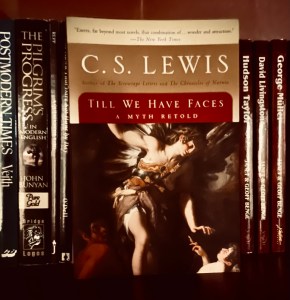
This book by C.S. Lewis, Till We Have Faces, has been on my bookshelf for years. I guess I have passed over this work so many times since fairy tales and myths are not necessarily my first preference. But maybe I am old enough now to start reading fairy tales!
…and so I did love reading this fairy tale! And, here are some of my favorite quotes and reflections.
Favorites
“It was the hardest work I’d ever done, and, while it lasted, one could think of nothing else. I said not long before, that work and weakness are comforters. But sweat is the kindest creature of the three—far better than philosophy, as a cure for ill thoughts.”
“The sight of the huge world put mad ideas into me, as if I could wander away, wander forever, see strange and beautiful things, one after the other to the world’s end. The freshness and wetness all about me…made me feel that I misjudged the world; it seemed kind, and laughing, as if its heart also danced.”
“…but who can feel ugly, when their heart feels joy.”
“One of his maxims was that if we cannot persuade our friends by reasons, we must be content and not bring a mercenary to our aid.”
Reflections
In Till We Have Faces, CS Lewis is said to have reworked the classical myth of Cupid and Psyche. Although true, his rendition focuses most on the thoughts and emotions of Psyche’s ugly half-sister, Orual. Her struggle was with rejection and ultimately smothering the ones who did love her. When few people care, is it any wonder to hold tightly to those who do?
If there is anyone we think most about, it is ourselves, as Orual herself did throughout this story. And of interest is how often she explained herself to herself finding all sorts of justification for her thoughts and deeds. This is certainly a method we all use in self-evaluation, maybe too frequently leading to an ideological justification for our own actions.
Such ideological justification seems to be increasingly prevalent. More and more within our current culture of extremes, the mantra of the day seems to be “the end justifies the means.”
For the benefit of not only ourselves but truly loving those around us and for the health of society, we remain hampered Till We Have Faces, til we face the truth. I believe our journey begins with sincerity in our hearts and honesty in how we impact those around us. This is what I desire, that hopefully my thoughts turn quickly toward others first and myself last.
Do nothing out of selfish ambition or vain conceit. Rather, in humility value others above yourselves, not looking to your own interests but each of you to the interests of the others.
“Some day you will be old enough to start reading fairy tales again.”
C.S. Lewis
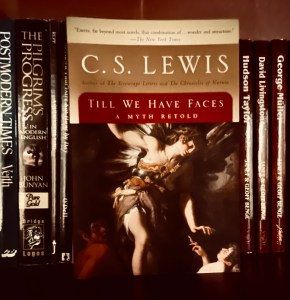
This book by C.S. Lewis, Till We Have Faces, has been on my bookshelf for years. I guess I have passed over this work so many times since fairy tales and myths are not necessarily my first preference. But maybe I am old enough now to start reading fairy tales!
A young reader was so enthusiastic about this novel, Bluebird by Sharon Cameron, that she persuaded me right then and there to purchase the book. So from the “rubble of Berlin” to the “streets of New York”, a thriller awaits me.
based on a true story
FAVORITE QUOTES
Remembering the past…“It’s always better to know. You should always know the things that happened. If you don’t know, then you can’t understand what justice is” (p105).
What was then is beginning to feel like what is now…“The world has inverted. Turned inside out. Right is wrong and wrong is right. Nothing is real. Nothing is true…In the old world, food and clothes were easy. Endless. They just appeared. This is the new world” (pp119, 130).
Reflections
“A PAGE-TURNER UNTIL THE END,” written by the Jewish Book Council concerning this novel, was not an understatement. As soon as I thought I knew where the storyline was headed, an unexpected turn of events occurred.
What I appreciated most was how realistic the atrocities of war were depicted and not romanticized. Too often, youth and young adult historical fiction seem to gloss over such horrors, failing to capture the reality of actual history, which is so essential to understand.
The novel’s historical significance was important to me as a reader further along in life. But if I were young, I would have appreciated most how the action never seemed to slow down. I don’t believe I’ve ever read a book that had me so captivated with the pace of the storyline until its final page. Well done!
I just completed this classic. In the past, strength of dialogue was not necessarily a priority. Jane Austen has changed my mind.
Pride and Prejudice
Vanity and pride are different things, though the words are often used synonymously. A person may be proud without being vain. Pride relates more to our opinion of ourselves, vanity to what we would have others think of us.



 kaffeeklatsch | coffee & conversation